

How to Pest-Proof Your Home Before Summer
Summer is the peak season for pest activity. Warmer temperatures accelerate breeding cycles, food sources become more abundant, and insects and rodents that have been lying low through winter begin moving again — often in the direction of your home. By the time you notice a problem in July or August, it’s usually been developing for weeks.
The good news is that most pest problems are preventable. A few hours spent pest-proofing your home before summer arrives can save you considerably more time, money, and stress later in the season. Here’s exactly what to do.
Understand Why Summer Is Peak Season
Before getting into the practical steps, it helps to understand what changes as temperatures rise.
Insects are cold-blooded, meaning their activity levels are directly tied to temperature. As spring warms into summer, ants, cockroaches, mosquitoes, flies, and wasps all become dramatically more active — feeding more, breeding more, and expanding their range. Rodents, which are active year-round, also become more mobile in warmer months as they follow food sources and seek cool shelter inside buildings.
For homeowners, this means summer isn’t just when you notice pests more — it’s genuinely when pest pressure is at its highest. Starting your prevention efforts in spring, before the season peaks, gives you the best possible chance of staying ahead of the problem.
Start Outside: Your Garden and Perimeter
The most effective pest-proofing starts at the boundary of your property, not inside your home. If pests can’t find a reason to approach your house, they’re far less likely to find their way in.
Clear Away Debris and Clutter
Overgrown vegetation, piles of wood, stacked garden furniture, and general clutter all provide shelter and nesting sites for rodents, insects, and spiders. Before summer:
- Cut back overgrown shrubs and plants, particularly those growing against the house walls — these act as a bridge for pests to access the building
- Remove any piles of wood, leaves, or garden waste from against the house and store them away from the structure if possible
- Clear out any clutter from sheds and outbuildings, which are common nesting sites for rodents and wasps
Check for Standing Water
Mosquitoes breed in standing water, and it takes surprisingly little — a blocked gutter, a forgotten plant pot saucer, a tarpaulin that’s collected rainwater — to provide a viable breeding site. As temperatures rise, a small pool of stagnant water can produce hundreds of mosquitoes within days.
- Clear and clean gutters to ensure water flows freely
- Empty any containers that collect water: plant pot saucers, buckets, bird baths (refresh weekly), paddling pools when not in use
- Check that water features circulate properly — still water attracts mosquitoes; moving water does not
- Fill in or drain any areas of the garden where water consistently pools
Tidy Up Food Sources
Outdoor food sources draw pests from a wide area. Wasps, ants, flies, and rodents are all attracted by accessible food.
- Keep outdoor bins tightly lidded and position them away from the house where possible
- Clean bins regularly — food residue on the inside of a bin lid is enough to attract wasps
- Don’t leave pet food outside for extended periods
- Clear up fruit that has fallen from trees promptly — rotting fruit is a significant attractant for wasps, fruit flies, and rodents
- After barbecues, clean the grill thoroughly and don’t leave food scraps on outdoor surfaces overnight
Check the Perimeter of the Building
Walk around the outside of your home and look for anything that needs attention:
- Check where pipes, cables, and utility lines enter the building — any gap around these is a potential entry point for rodents and insects
- Look at the condition of door frames, window frames, and the joints between different building materials — wood that is rotting or damaged provides both an entry point and nesting material
- Check the foundation for cracks — even small ones can be exploited by rodents, ants, and cockroaches
Seal Entry Points
This is arguably the single most impactful thing you can do to pest-proof your home. Pests get inside because there are gaps in the building fabric that allow them to. Identifying and sealing those gaps removes the access routes entirely.
Gaps Around Pipes and Cables
Every point where a pipe or cable passes through an external wall is a potential entry point. Even a gap of 6mm — the width of a pencil — is large enough for a mouse to squeeze through. Use wire wool, expanding foam, or purpose-made pipe collars to seal these gaps properly.
Doors and Windows
- Check that all external doors close fully and that there are no gaps at the bottom, sides, or top. Door sweeps and draught excluders seal the gap at the base of doors effectively
- Inspect window frames for gaps or cracks in the surrounding sealant
- Fit fly screens to windows and doors you want to leave open during summer — these are one of the most effective and least intrusive ways of keeping flying insects out while maintaining ventilation
- Check that door and window frames are in good condition — rotting wood is both a structural weakness and a nesting site
Roof and Loft
- Inspect the roofline for missing or damaged tiles, which can allow birds, bats, squirrels, and insects to access roof spaces
- Check fascia boards and soffits for gaps or deterioration
- Ensure loft vents are intact and properly screened — these need to allow airflow but not wildlife
Vents and Chimneys
- Fit mesh guards over air vents to prevent insects and rodents from entering while maintaining airflow
- Consider a chimney cap or cowl if the fireplace isn’t in use — open chimneys are a common entry route for birds, squirrels, and wasps looking to nest
Cracks in Walls and Foundations
- Fill any visible cracks in external walls with appropriate exterior filler
- Pay particular attention to the junction between different materials — brickwork and timber, for example — where movement over time often creates gaps
Inside the Home: Reduce Attractants
Even with a well-sealed building, no home is entirely impermeable to determined pests. Reducing the attractants inside the home makes it far less likely that any pest that does find its way in will want to stay.
Kitchen and Food Storage
The kitchen is the primary target for most household pests — it offers food, water, and warmth in close proximity.
- Store dry goods (cereals, grains, flour, pasta, pet food) in sealed, airtight containers rather than in their original packaging. Pantry moths, cockroaches, and rodents can all chew through cardboard and plastic bags
- Don’t leave dishes in the sink overnight — food residue is enough to sustain an ant trail or attract cockroaches
- Clean behind and under appliances regularly — crumbs and food residue accumulate in these areas and are rarely dealt with during routine cleaning
- Keep the bin lidded and empty it regularly. If you compost food waste indoors, use a sealed caddy and empty it frequently
- Fix any dripping taps or leaking pipes under the sink — cockroaches and other insects are attracted by water sources as much as food
Bathrooms and Utility Rooms
- Fix any leaks promptly — damp conditions attract a wide range of pests, including cockroaches, silverfish, and drain flies
- Ensure plug holes are fitted with strainers or covers and clean drains regularly to prevent the organic buildup that attracts drain flies
- Check under sinks and around toilet bases for gaps around pipe work
Storage Areas
Loft spaces, basements, garages, and under-stairs cupboards are favourite nesting areas for rodents and insects. They’re typically dark, undisturbed, and cluttered — exactly the conditions pests look for.
- Reduce clutter as much as possible
- Store items in sealed plastic boxes rather than cardboard — rodents and insects can chew through cardboard, and it provides nesting material
- Check stored items periodically, particularly if the area is rarely visited
- Ensure the space is as dry as possible — address any damp or moisture issues
Target Specific Summer Pests
Some pests require specific seasonal attention as summer approaches.
Wasps
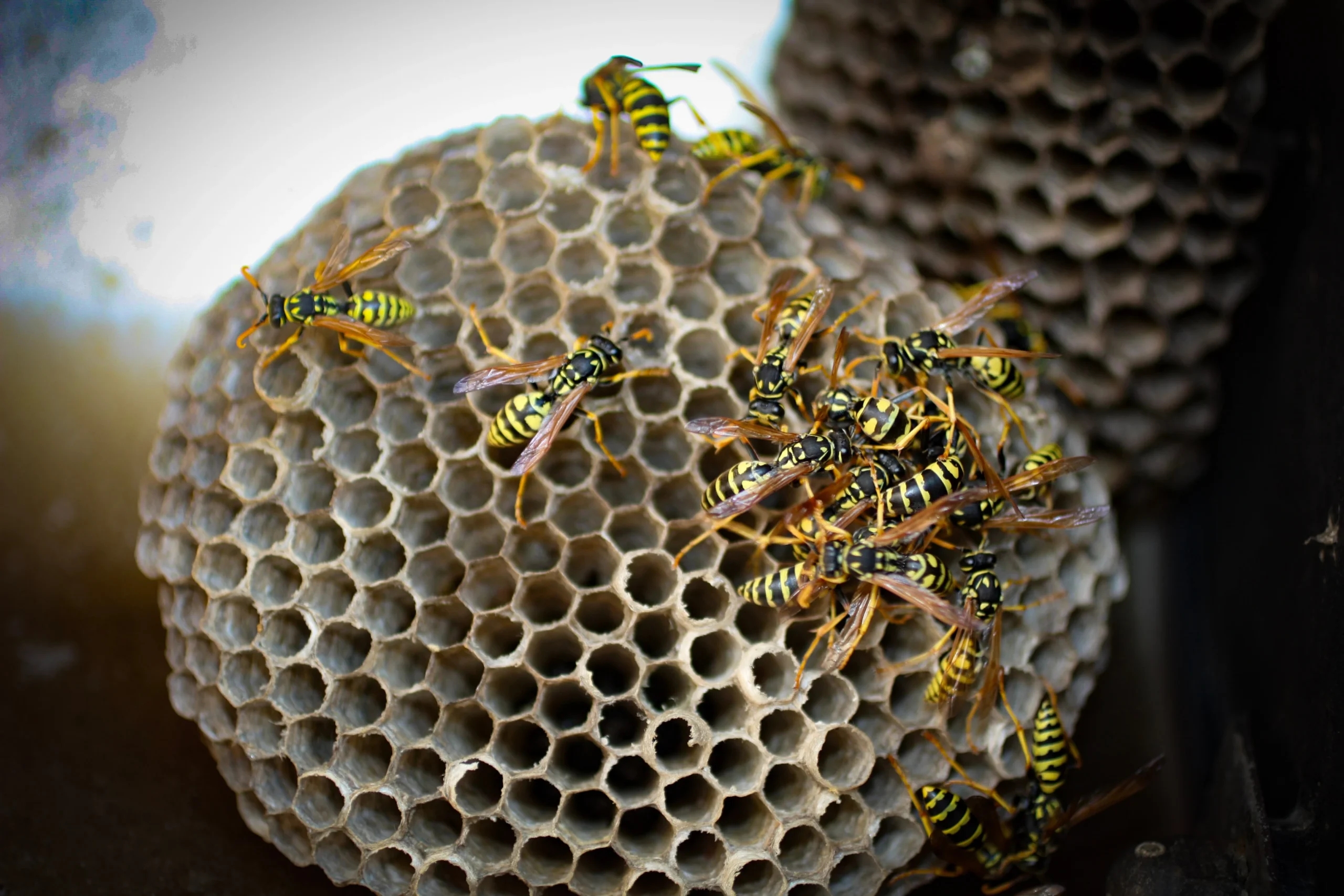
Wasp queens emerge in spring and immediately begin looking for a nest site. Early spring is when nest building starts — by summer, a colony can contain thousands of wasps. Checking for nest activity in spring, before colonies reach their peak, makes any intervention significantly easier and safer.
Check sheltered spots: under eaves, in loft spaces, inside wall cavities, in garden sheds, under decking, and in the ground (particularly in lawns and flowerbeds for ground-nesting species). A small, golf ball-sized nest in early spring is far more manageable than a large established colony in August.
Ants
Ant colonies become active in warmer weather and start foraging more widely. In spring, check for any ant trails leading into the house and identify entry points. Seal them before the season peaks. Pay particular attention to the kitchen and any areas where food is stored.
Mosquitoes
As covered above, eliminating standing water is the single most effective thing you can do to reduce mosquito pressure. Additionally:
- Consider treating any water features that can’t be emptied with biological mosquito larvicide — safe for wildlife and very effective
- Fit fly screens to windows and doors in rooms where you spend the most time
- If you have a garden, certain plants — lavender, citronella, marigolds, basil — are thought to have some deterrent effect on mosquitoes, though they’re not a substitute for eliminating breeding sites
Flies
House fly activity peaks in summer, particularly around outdoor bins, compost areas, and any animal waste in the garden.
- Keep bins clean and lidded
- Clean up animal waste promptly
- Use fly screens on frequently opened windows and doors
- Keep kitchen surfaces clean and food covered
Consider a Professional Pre-Season Inspection
For homeowners who want complete peace of mind — particularly in areas with known termite pressure, persistent rodent issues, or a history of ant problems — a professional pre-season inspection is worth considering.
A qualified pest control specialist can identify vulnerabilities in your property that aren’t obvious to the untrained eye, spot early signs of activity before they develop into full infestations, and carry out preventative treatments where appropriate. In areas of California where termite and rodent pressure is particularly high, this kind of proactive approach can prevent significantly more costly problems further down the line.
A Pre-Summer Pest-Proofing Checklist
Use this as a quick reference to work through before summer arrives:
Outside
- [ ] Cut back vegetation touching the house
- [ ] Remove piles of wood, debris, and clutter from against the building
- [ ] Clear and clean gutters
- [ ] Empty containers that collect standing water
- [ ] Clean outdoor bins and check lids seal properly
- [ ] Clear fallen fruit and food debris from the garden
- [ ] Inspect the building perimeter for cracks and gaps
Entry Points
- [ ] Seal gaps around pipes and cables entering the building
- [ ] Check and repair door seals and door sweeps
- [ ] Inspect window frames for gaps
- [ ] Fit fly screens to windows and doors
- [ ] Check roof tiles, fascia boards, and soffits
- [ ] Fit mesh to vents and consider a chimney cap
Inside
- [ ] Transfer dry goods to sealed airtight containers
- [ ] Clean behind and under kitchen appliances
- [ ] Fix any dripping taps or leaking pipes
- [ ] Clean drains in kitchen and bathroom
- [ ] Reduce clutter in loft, basement, and storage areas
- [ ] Replace cardboard storage boxes with sealed plastic ones
Pest-Specific
- [ ] Check for early wasp nest activity in spring
- [ ] Identify and seal any ant entry points
- [ ] Treat water features with larvicide if needed
- [ ] Consider a professional pre-season inspection
Final Thoughts
Pest-proofing your home before summer isn’t a single afternoon’s work — it’s a combination of small, consistent habits and a few targeted one-off tasks. The effort you put in during spring pays dividends throughout the warmer months, when pest pressure is at its highest and problems can escalate quickly.
Start with the outside, work your way in, seal what needs sealing, remove what’s attracting pests, and deal with any early signs of activity before they develop. Prevention is always easier, faster, and cheaper than dealing with an established infestation.
And if you do spot something that’s beyond DIY territory — or if you simply want the reassurance of a professional assessment — don’t hesitate to call in the experts. The earlier a problem is identified, the simpler it is to solve.
This article is intended for general informational purposes only. For accurate identification and treatment of any pest infestation, always consult a qualified pest control professional.