

A Complete Guide to Home Accessibility Modifications for Disabled Adults
For many disabled adults, the home should be a place of comfort, safety, and independence. But standard homes are rarely designed with accessibility in mind, and even small barriers — a step at the front door, a narrow bathroom, a high kitchen counter — can significantly limit daily life.
The good news is that home accessibility modifications can transform a space, making it possible to live safely and independently without the need to move into assisted living. Whether you’re planning ahead, recovering from an injury, or adapting to a progressive condition, this guide covers everything you need to know.
Why Home Modifications Matter
The vast majority of disabled adults want to remain in their own homes for as long as possible — and with the right modifications, many can. Research consistently shows that people living in accessible homes experience better mental health, greater independence, and fewer accidents than those in unadapted properties.
Beyond quality of life, home modifications can also reduce the burden on caregivers and healthcare systems. A well-placed grab rail or a roll-in shower can prevent a fall that might otherwise result in hospitalisation.
Start With a Professional Assessment
Before spending money on modifications, it’s worth arranging a home assessment with an occupational therapist (OT). An OT will evaluate your specific needs, the layout of your home, and your daily routines to recommend the most effective and cost-efficient changes.
This step is particularly important because:
- Not all modifications suit every condition or disability
- Some changes may qualify for funding or grants (see below)
- A professional can identify hazards you may not have noticed
- They can prioritise modifications by urgency and impact
Many local councils and disability organisations offer free or subsidised OT assessments, so it’s worth checking what’s available in your area before paying privately.
Entrance and Exterior Modifications
The journey into and out of your home is often the first barrier to address.
Ramps and Steps
If your home has steps at the entrance, a ramp is usually the most practical solution. Ramps should:
- Have a gentle gradient (ideally no steeper than 1:12 — one inch of rise for every 12 inches of length)
- Be wide enough for a wheelchair or scooter (at least 36 inches)
- Have a non-slip surface
- Include handrails on both sides where possible
Portable ramps are available for temporary needs, while permanent ramps can be constructed from wood, concrete, or aluminium.
Pathways and Driveways
Ensure pathways from the street or driveway to the front door are:
- Wide enough for mobility aids
- Free from loose gravel, cracked paving, or uneven surfaces
- Well lit, particularly for those with visual impairments
- Level, or with gentle slopes where level isn’t possible
Door Width
Standard doorways are often too narrow for wheelchairs. A minimum width of 32 inches is needed for most wheelchairs to pass through, though 36 inches is preferable. Options include:
- Replacing doors with wider frames
- Installing offset hinges, which can add up to two inches of clearance without structural work
- Removing the door entirely where privacy isn’t required
Door Hardware
Replace round doorknobs with lever-style handles, which are far easier to operate for those with limited grip strength or dexterity.
Bathroom Modifications
The bathroom is statistically the most dangerous room in the home for disabled adults and older people. It’s also one of the most important areas to adapt.
Grab Rails and Bars
Grab rails provide support for getting on and off the toilet, in and out of the bath or shower, and moving around the bathroom generally. They must be:
- Securely fixed into wall studs (not just plasterboard)
- Positioned at the right height and angle for the individual user
- Made from non-slip material
A professional should always install grab rails — an insecure rail that gives way under pressure can cause serious injury.
Walk-In Showers and Wet Rooms
Replacing a standard bath with a walk-in shower or full wet room is one of the most impactful bathroom modifications available. A level-access shower with no lip or threshold removes the need to step over anything, making it safe for wheelchair users and those with balance difficulties.
Key features to consider:
- Non-slip flooring throughout
- Fold-down shower seat for those who cannot stand for long periods
- Handheld shower head on an adjustable rail
- Thermostatic mixer valve to prevent scalding
Raised Toilet Seats and Toilet Frames
A raised toilet seat reduces the distance needed to lower and raise yourself, which is particularly helpful for those with hip or knee problems. Toilet frames provide armrests to push up from, adding further support.
Roll-Under Sink Vanity Units
Standard bathroom vanities don’t allow wheelchair users to get close enough to the sink comfortably. Replacing them with a roll-under unit — where there’s open space beneath the sink — allows full access from a seated position.
Bedroom Modifications
Adjustable Beds
An adjustable bed allows the user to raise the head or foot independently, which can help with conditions affecting circulation, breathing, or pain. Height-adjustable beds also make it easier to transfer in and out, either independently or with caregiver assistance.
Bed Rails
Bed rails help prevent falls during the night and provide something to hold onto when getting in or out of bed. They should be properly fitted and positioned to avoid entrapment risks.
Positioning and Furniture Layout
Ensure there is enough clear floor space around the bed to manoeuvre a wheelchair or walking frame. Ideally, there should be at least 36 inches of clear space on the transfer side of the bed. Remove unnecessary furniture that creates obstacles.
Lighting
Good lighting reduces fall risk, particularly for those with visual impairments. Consider:
- Motion-activated night lights along routes to the bathroom
- Bedside lamps with easy-to-reach switches or voice activation
- Bright, even overhead lighting without harsh shadows
Kitchen Modifications
Countertop Height
Standard kitchen countertops are designed for standing use and are too high for wheelchair users. Lowering sections of countertop — or installing height-adjustable units — allows food preparation from a seated position.
Roll-Under Spaces
As with the bathroom sink, roll-under spaces beneath sections of the countertop and the cooktop allow wheelchair users to work comfortably without having to reach across surfaces.
Accessible Storage
Relocate frequently used items to lower shelves and drawers within easy reach. Pull-out drawers and lazy Susan rotating shelves make deep cabinets far more accessible.
Lever Taps and Easy-Grip Appliances
Replace standard taps with lever or sensor-operated models. Choose appliances with large, clearly marked controls that can be operated with limited grip or dexterity.
Cooktop Safety
Induction hobs are generally safer than gas or electric ring cooktops as they don’t get hot themselves — only the pan heats up. Front-mounted controls also remove the need to reach over hot surfaces.
Living Areas
Flooring
Hard flooring such as wood, laminate, or tile is generally easier to navigate in a wheelchair than thick carpet, which creates resistance and makes pushing harder. Where carpet is preferred, a low-pile, firm option is more suitable.
Remove loose rugs entirely — they are a serious trip and fall hazard.
Furniture Arrangement
Ensure there are clear, wide pathways through living areas. Furniture should be arranged to allow easy access to seating, with enough space to manoeuvre mobility aids comfortably.
Seating
Choose chairs and sofas that are firm enough to push up from and at a height that makes sitting and standing easier. Seat raisers can be added to existing furniture to increase height where needed.
Stairlifts and Home Lifts
For multi-storey homes, stairs can be a significant barrier. The two main solutions are:
Stairlifts
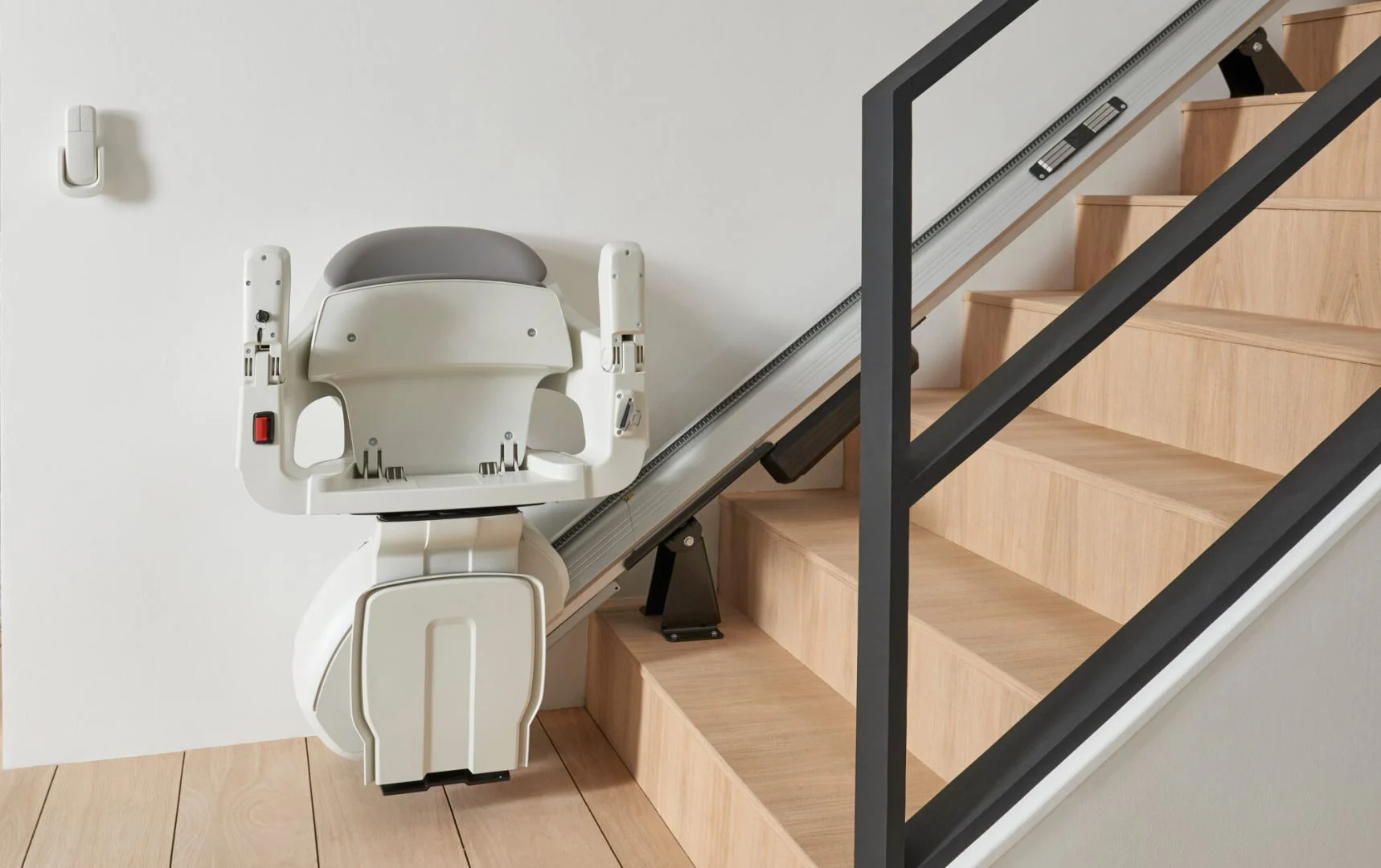
A stairlift carries the user up and down the staircase on a motorised chair. They can be fitted to straight or curved staircases and are significantly less expensive than a home lift. However, the user must be able to transfer between the stairlift chair and their own wheelchair or mobility aid at each level.
Through-Floor Lifts
A through-floor or home lift moves the user between floors in an enclosed platform. Unlike a stairlift, it can accommodate a wheelchair directly. Installation requires more structural work and is more expensive, but provides a more seamless solution for wheelchair users.
Smart Home Technology
Technology is playing an increasingly important role in home accessibility. Smart home devices can significantly enhance independence for disabled adults, including:
- Voice-controlled lighting, heating, and appliances via systems like Amazon Alexa or Google Home
- Video doorbells that allow you to see and speak to visitors without going to the door
- Smart locks that can be operated remotely or via a smartphone
- Emergency alert systems that can call for help at the press of a button
- Automated curtains and blinds for those with limited mobility
Many of these technologies are affordable and straightforward to install without professional help.
Funding and Financial Support
Home modifications can be costly, but there are a number of funding sources worth exploring:
Disabled Facilities Grant (UK)
In the UK, the Disabled Facilities Grant (DFG) provides means-tested funding for essential home modifications for disabled people. It can cover up to £30,000 in England and is administered by local councils. An OT assessment is typically required as part of the application.
Local Authority Grants and Loans
Many local councils offer additional grants, loans, or handyperson services for home modifications. Eligibility criteria vary, so contact your local council directly to find out what’s available.
Charitable Grants
A number of charities provide grants for home modifications, particularly for specific conditions or groups. Organisations such as Turn2us offer grant-finding tools to help identify relevant sources of funding.
Veterans’ Benefits
Veterans may be eligible for specific home modification grants through veterans’ organisations or government programmes.
Insurance
Check whether your home insurance, health insurance, or any disability insurance policy covers the cost of home modifications.
Choosing the Right Contractors
Not all builders and contractors have experience with accessibility modifications. When selecting a contractor:
- Ask specifically about their experience with accessibility work
- Request references from previous accessibility projects
- Ensure they are familiar with relevant regulations and standards
- Get multiple quotes and compare them carefully
- Check they are properly insured
For equipment such as stairlifts, grab rails, and hoists, using a specialist supplier rather than a general contractor is strongly recommended. Specialist suppliers can advise on the right equipment and ensure it is installed correctly and safely.
Prioritising Your Modifications
If budget is limited, it helps to prioritise modifications by their impact on safety and independence. As a general guide:
- Bathroom modifications — highest fall risk, most immediate impact
- Entrance access — essential for getting in and out of the home
- Bedroom safety — affects rest and overnight safety
- Stair access — critical for multi-storey homes
- Kitchen and living areas — important for independence but generally lower urgency
Final Thoughts
Adapting a home for accessibility doesn’t have to mean sacrificing style or comfort. With thoughtful planning and the right professional advice, most homes can be modified to support independent, safe living for disabled adults of all ages and with a wide range of conditions.
Start with a professional assessment, explore your funding options, and tackle modifications in order of priority. Small changes can make an enormous difference — and in many cases, the right adaptations can mean the difference between staying in your own home and having to move elsewhere.
Your home should work for you. With the right modifications, it can.